Dual-Mastering: One Track, Two Worlds
Dance music now exists in two versions: one mastered for streaming, one for club systems. Inside the quiet split reshaping sound, DJ culture, and the future of electronic music.
5 minutes read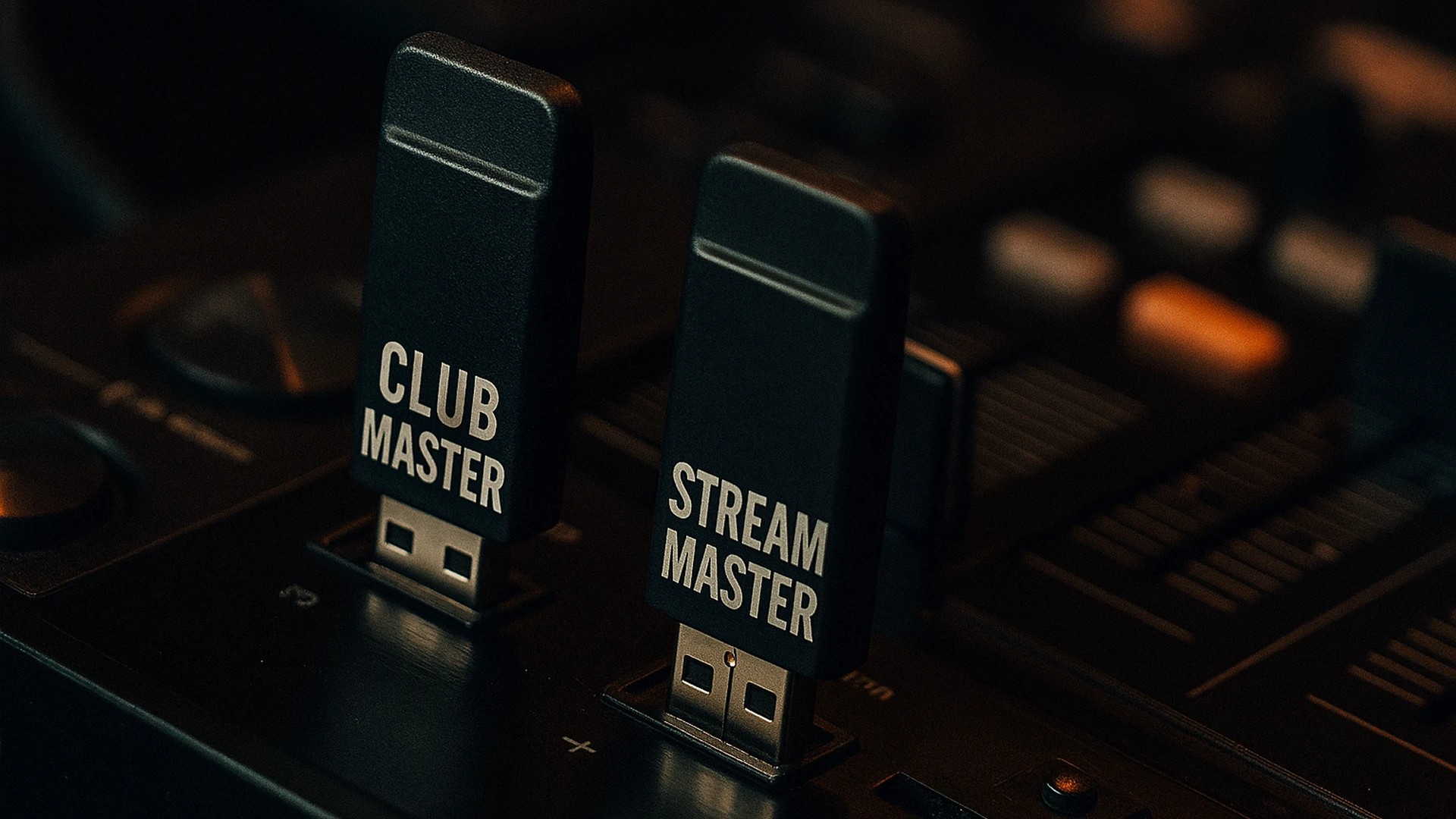
There was a time when a track existed in one form: mixed, mastered, pressed, played.
A DJ bought the vinyl or the WAV, dropped it into a room, and the room responded.
One record, one environment, one experience.
That era is gone.
In 2025, dance music increasingly lives a double life.
One version built for the club: wide, dynamic, physical.
Another built for streaming: loud, compressed, attention-proof.
The same track, but mastered for two worlds that no longer speak the same language.
This quiet shift is reshaping how producers work, how DJs shop, how listeners consume, and how music itself is engineered. And almost no one outside the studio is talking about it.
Until now.
Why One Master Isn’t Enough Anymore
To understand why dual-mastering exists, you have to understand how different the listening environments have become.
The club is a body-level medium, bass you feel in your ribs, transients sharp enough to make your teeth buzz.
Streaming is a background medium, headphones on a commute, a UE Boom in a kitchen, lo-fi speakers folded into everyday noise.
A streaming master needs presence and polish. A club master needs space. You physically can’t mix them the same way.
- Oriol Gomez (producer from Barcelona)
He’s right.
Clubs demand headroom.
Streaming platforms punish it.
So producers now export twice:
Club Mix → lower LUFS, more dynamic, more punch, more transient attack.
Streaming Mix → louder average volume, softened peaks, tighter mid-range to survive playlists.
Not because anyone romanticised the difference, but because platforms forced it.
The Algorithm Changed the Mix, Not the Music
Streaming algorithms make decisions based on listener behaviour: skips, replays, engagement length, session continuity. Loudness correlates with attention, and attention powers the machine.
Which means a track mastered quietly for club dynamics risks sounding flat in a playlist.
Which means listeners skip.
Which means the algorithm buries it.
The result?
A track mastered for a club will almost always underperform online.
Producers know this.
Labels know this.
Mixing engineers know it better than anyone.
What used to be an artistic decision is now a survival mechanism.
You either optimise for impact in a room,
or optimise for ranking in a feed.
Very few masters do both.
The Secret File DJs Never Share
Across Telegram folders, Discord dumps, USB hand-offs and Dropbox links, another reality exists beneath the mainstream release.
It’s the same track, but harder.
Sharper.
Less compromised.
A version built for the room, not the rating.
We get promos with two masters. One says ‘Stream,’ the other says ‘Club.’ If you accidentally play the streaming version, the sub is gone. You feel the difference in your knees.
- A Manchester promoter who runs nights in the Northern Quarter
That difference is where this story lives.
This isn’t just a technical trend.
It’s cultural dividing.
There is music for consumption and music for experience.
Two audiences.
Two outcomes.
Two futures forming in parallel.
The Return of Physicality
Dance music has always been physical.
Even in home listening, the genre was born in rooms with bodies, sweat, friction, air pressure moving like weather.
Streaming abstracts that.
It turns physical sound into informational sound: portable, passive, data-compatible.
Dual-mastering is the backlash.
The club mix is a refusal.
A statement.
A reminder that this was meant to be felt, not just heard.
Producers who care about low-end weight and transient punch now insist on two masters not to serve platforms, but to protect the original intent from them.
It is preservation disguised as compromise.
Inside the Studio: What Actually Changes
Most listeners assume mastering is volume balancing, but in dual-mastering, the difference is deeper.
Club masters breathe.
Streaming masters squeeze.
Club: longer release times, wider stereo field, cleaner transients, open headroom for the PA to handle.
Streaming: controlled peaks, more mid-focus, less sub to avoid muddy consumer playback, louder overall LUFS to compete.
“The club master is alive. The streaming master is well-behaved.”
Neither is wrong.
But they speak different dialects.
Why DJs Are Becoming Sound Archivists
The DJ of 2025 is no longer just a selector.
They’re an archivist of versions, digging for the “right” file the same way previous generations hunted for vinyl pressings.
WAV or MP3?
-6 LUFS or -10?
Dynamic or brickwalled?
Promo or public release?
Two producers can release identical track IDs on Beatport, yet one version rattles the room and the other falls flat.
This is no longer crate-digging.
It’s file-digging.
In a few years, DJs will flex with versions, not tracks.
- SELVA (a London DJ)
We’re already there.
What This Means for the Future of Dance Music
If dance music now splits into two versions: one for the body, one for the algorithm, the future will not be one path, but two.
In one path
Music becomes more stream-safe, playlist-friendly, loudness-optimised, curated for frictionless listening.
Accessible. Polished. Standardised.
In the other
Music becomes more dynamic, riskier, bass-forward, engineered for foggy rooms and late hours.
Physical. Messy. Alive.
Neither version will kill the other.
They will grow in parallel, but evolving under different pressures.
Two Formats, Same Track: A Quiet Revolution
What makes dual-mastering fascinating isn’t just the technical split.
It’s how quietly it happened.
No press release.
No manifesto.
No scene leader calling for action.
Just thousands of producers realising the modern world required two exports instead of one.
Not a movement, but an evolution.
And as with many evolutions in dance music history, it started as survival
and is becoming identity.
The Last Question: Which Version Lasts?
Years from now, music historians may look back and see dual-mastering as the moment electronic music forked into two ecosystems:
One lived online.
One lived on the floor.
Which one defines the era?
Which one becomes the archive?
Which one gets remembered, the compressed version or the physical one?
Streaming is convenience. The club is culture. Convenience doesn’t get remembered.
- Manchester promoter
Maybe he’s right.
Maybe the future belongs to the version that shakes walls, not playlists.
Maybe the file with more headroom has more longevity than the one with more loudness.
Maybe the music built to be felt will outlive the music built to be feed algorithms.
One track. Two masters.
Two worlds diverging.
The question is:
Which one are we going to follow?